Should Retiring Snowbirds Rent or Buy: Irma Provides Ample Lessons
Category: Retirement Real Estate
Note: This is Part 1 of a 2 Part series. Part 2 is “The Worst Places to Retire: Weather and Natural Disasters“.
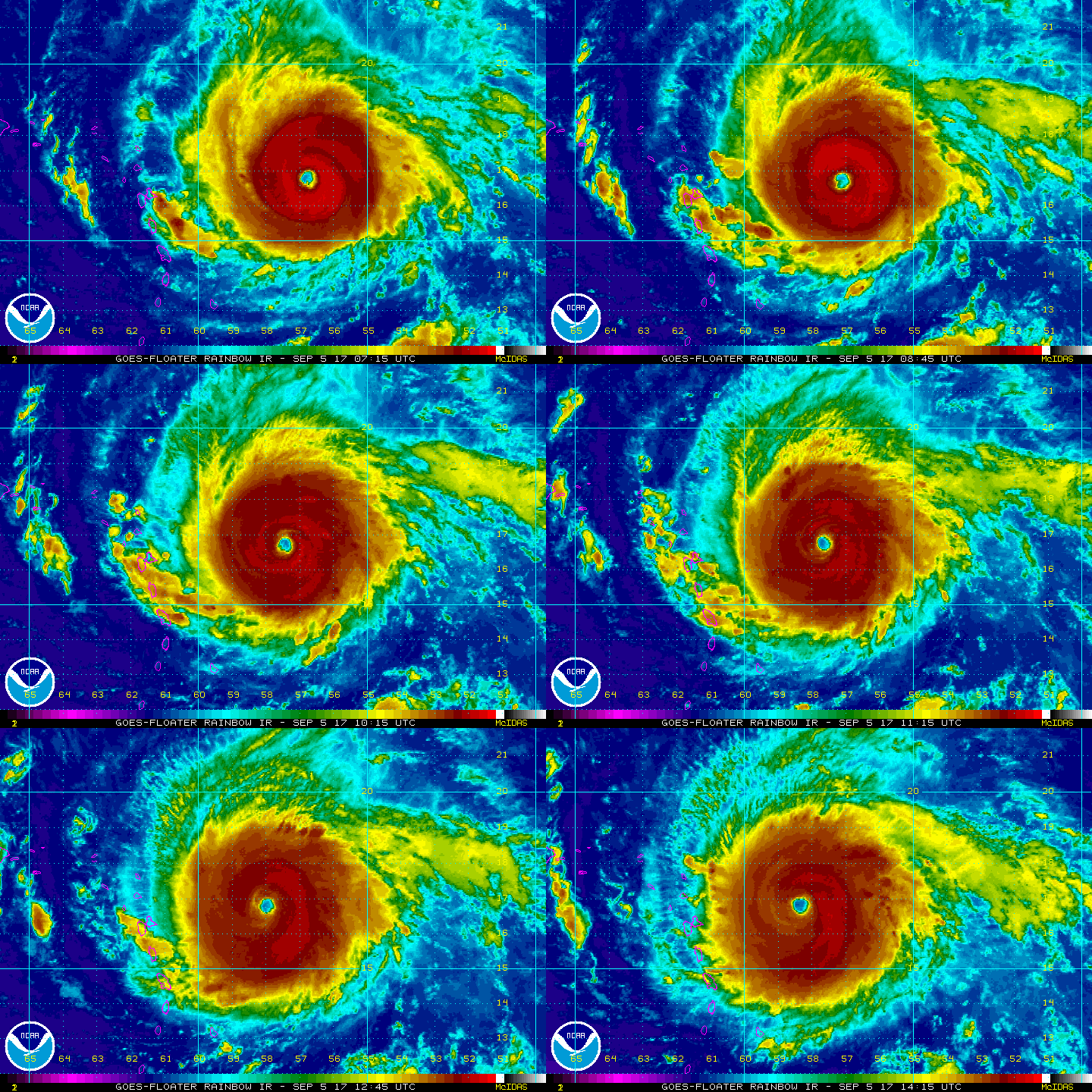
September 14, 2017 — The devastation caused by Hurricane Harvey in Texas and Irma in Florida will provide many painful lessons for snowbirds and Sunbelt retirees. Those experiences impact where to live, what type of housing to choose, and whether to rent or buy. This article will explore those factors. We are grateful to Alan E for suggesting this topic. See bottom for more related articles on renting vs. buying and natural disasters.
Where to live
Almost every area of the country has its own set of natural disasters to worry about; it is hard to find a place that is immune to at least one of these: earthquake, hurricane, tsunami, blizzards, floods, sinkholes, tornadoes, droughts, wildfires, etc. When it comes to choosing a place to retire, it really boils down to picking your poison.
Over the long term Florida and Texas have had more devastating hurricanes than anywhere else, although in recent years New York, New Jersey, and Connecticut had more. Because Florida is a peninsula with coasts on three sides, the entire state is vulnerable. There is relatively little high ground – the highest point in the State is Britton Hill, a towering 345′ above sea level in the Panhandle.
Obviously the State has many attractions – except for Hawaii it has the warmest winters in the U.S., many towns offer very affordable living, and there is a huge variety of communities to choose from.
If you choose Florida to retire in, sooner or later you are going to face a hurricane, which will include wind, flood, and tornado hazards. There is not much high ground to choose from, but you can study FEMA maps and other flood records and try to avoid places that have a history of flooding. A city might successfully avoid a bad hurricane for a long time, but eventually its number will come up.
Type of Housing
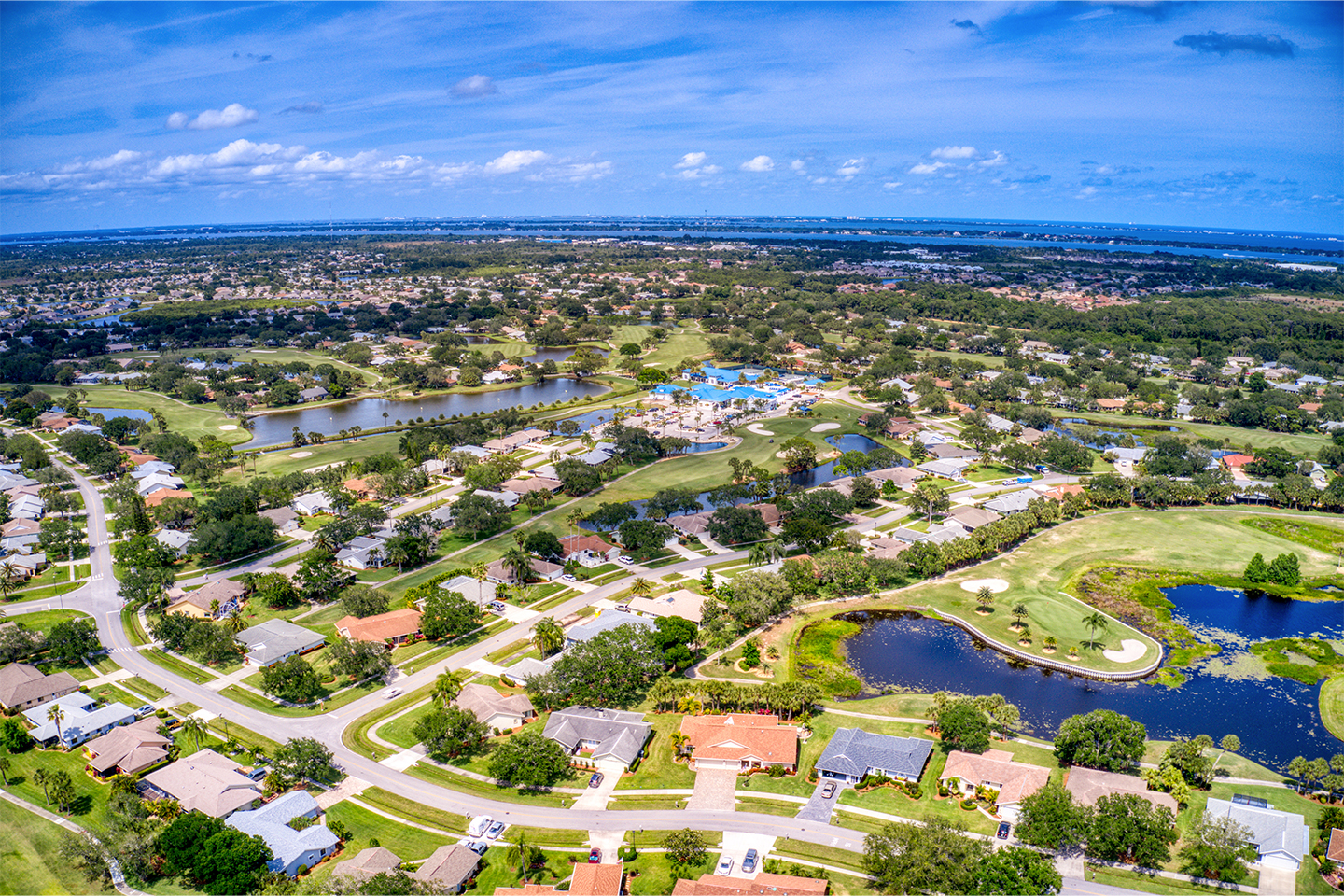
If you are buying, here is where your careful due diligence can pay off. Mobile and manufactured homes offer the most affordable housing choices, but as Irma victims are finding out, they are the most vulnerable. Obviously newer models built to stricter safety standards fare better. Single family, attached homes like townhomes or villas, and high rises generally offer more protection – depending on how and when they were built. A lot has to do with location – if the land is low or unprotected, the damage will be worse.
Knowing when your home is built and what type of protections it provides is critical. Wind resistant windows, shutters, and other types of protection are essential, yet many older buildings do not have them. It is important to know when the home is built and to what code. Newer homes have much more stringent standards that can prevent roofs from blowing off and walls coming down. Some features can be retrofitted, but that process can be expensive.
Living in a community with a Home Owners Association might offer more protection than living on your own. That is because the Association probably generally insures the outside of condominiums. Most of the time you will still be liable for damage to the interior from wind and flood. If shared facilities and other resources are damaged, at least the expense of repairing them will be shared.
Wherever you live in Florida, insurance against wind and flood will be expensive. Often it is available only from the insurer of last resort, Citizens Property Insurance Corp.
Lessons from Irma
Hurricane Irma provides a good lesson on the advantages of renting vs. buying, whether it is a second home if you are a snowbird, or a year-round residence. If the rental you reserved for this coming winter was damaged you might be out of luck for a place to spend the winter (and possibly lose your deposit). But you would be free to try to find another (which are probably in short supply). On the other hand, if you own a place that is damaged, your problems have just begun. It might be a total loss, and chances are you are either uninsured or don’t have enough coverage (flood insurance is usually capped at $250,000). If it is damaged, you are going to scrambling to find materials to protect it, secure and vet a contractor, and worry. Not to mention that you probably won’t have a place to live this winter either!
Buying vs. Renting – Pros and Cons
Is it better to buy a place than to continuing to rent? Countless snowbirds and retirees are wrestling with this issue. Here we will attempt to lay out some of the key issues to help cope with this conundrum.
Cons of Buying (which generally make them pros of Renting)
These are some of the big negatives that come with buying a place for the winter. Most of them reflect the negative sides of the beauty of renting, which is truly Lock and Leave. If something bad happens to the property you are renting, like a hurricane – it is not your problem!
– Cost of entry. The biggest disadvantage that comes with buying is, obviously, the cost. Assuming you are a snowbird and live somewhere else the rest of the year, do you have sufficient free capital or borrowing power to own two homes?
– There is risk. If there is a hurricane or other natural disaster, and these do tend to occur fairly frequently in areas with warm winters, you will have to pick up the pieces. If the damage is severe enough, you might not even be able to repair it sufficiently to be able to live there yourself the next season.
– Your investment sits idle a great part of the year. Although in some resort markets you might be able to rent your home or condo in the summer months, that is generally not the case. Which means you have a valuable asset that costs money in taxes, air conditioning, utilities, and maintenance – even when you are not there. You also have to insure the property and pay Community Association fees year-round.
– Maintenance issues. Whereas if the pool malfunctions when renting it is the landlord’s responsibility to fix it, if you own the place you now have a big headache. This also applies to finding your weed and pest control service, etc. And, every so often you are going to have to upgrade your furnishings, paint, put on a new roof, or replace an expensive air conditioning unit.
– If you end up not liking your town or community, you are stuck. Now you either have to suck it up or move, which is always a hassle. On the other if you are renting, your exit is easy and automatic. And, you get an easy opportunity to check out an area without making a major investment.
Pros of Buying (and negatives of Renting)
– Number 1, you will have a place to live. That brings considerable peace of mind. It also eliminates the danger of losing a place you really like – when the owner decides to spend more time there or rent to his brother-in-law.
– Minimum hassle. You don’t have to wait to hear back from landlord, or scramble through VRBO or realtor sites trying to identify possible rentals. It also avoids traipsing through multiple inspection tours.
–No rent increases or annoying landlords. You are the landlord and in control.
– Plenty of storage. Your bikes and other toys, your spices, and a set of clothes are all there. Unless you have pets, you can usually fly back and forth in the spring and fall. You avoid a 3 day drive in an overloaded car loaded with all your stuff.
– Room for your pets. It is generally quite hard to find a rental that will accept pets. And although most community associations have some pet restrictions even for owners, you stand a much better chance of bringing along Felix or Fido if you own your own place.
Bottom line
Hurricane Irma highlights all the advantages of renting your retirement home instead of buying it. But the many problems our friends have had with rentals over the years (although there are plenty of happy situations too), we can understand why many boomers are tempted to buy a winter home and avoid the rental market. It is a difficult decision with many competing factors. To help everyone understand these issues more clearly, we hope our Members will share their experiences and outlook in the Comments section below.
PS – one of our readers asked about how to find a rental in a new location. Here was our advice:
First of all, renting before you buy is a great idea. There are lots of good ideas in the related articles below. With AirBnB, VRBO, and HomeAway it is easier than it used to be, particularly for short term rentals. Seasonal and monthly rentals can be tough in hot snowbird markets.
What Do You Think?
Do you plan on renting or buying? Does Hurricane Irma, a warming planet, and rising sea levels make you change your mind? Use the comments section below to post your reactions and thoughts. What does your crystal ball tell you?
Additional Resources
Worst Places to Retire on Basis of Weather and Natural Disasters
Cost of Renting vs. Buying in 10 Cities
Time to Rent or Buy?
Snowbird’s Dilemna: Rent or Buy?
Baby Boomers Face a Dilemma: Buy or Rent
How to Retire in Style and on a Budget
Should You Buy or Rent (Kiplingers)



Comments on "Should Retiring Snowbirds Rent or Buy: Irma Provides Ample Lessons"
mary11 says:
Im having a difficult time deciding between the two. ... nice article. After selling our condo I want to invest my money somewhere safer than in stocks but don't know if buying another home is a better choice over all. All the rent or buy calculators will tell you buying is a better investment in the long run unless you can find a low cost rental. Also no options for a reverse mortgage if you rent, but then you have more privacy with having your own land and you can have as many animals you'd like. ..
mari says:
I have a small condo since 2000. So far it has been cheap to keep, with HOA fees, insurance and upkeep. It is only 970 sq.ft. I would like a larger living area but hard for us to decide to buy a house or condo. I have lived with both for 40 years. It is true, you do buy with your pets in mind. Our generation need our animals. I would like to see more condos accepting more animals, but the owners are usually the ones that have to be reprimanded not the animals. Good luck to everyone.
by Mari Sept.14, 2017
Wil Ferch says:
What about the BIG pro of owning?......writing off your mortgage on income tax, if you have a mortgage. You don't even mention that aspect.
Fred says:
My flood coverage is $250,000 for the dwelling. the article states there is a $200,000 cap. Minor difference but still significant fact.
Editor's comment: Fred, you are so right. That figure was on our Fact check list and we overlooked it. Standard flood coverage is $250,000. We will correct the article and thank you so much for keeping us straight!
Gregory Matthews says:
My reply might sound gruff (retired coach): We retired in NW Florida fully aware we could get knocked out by hurricanes, tidal surges, lightning strikes, etc. You live, you die! There are no easy outs at our end of life's spectrum so get your plans figured out, make your stand, and sprint toward the finish line! Now, get out there and live your dream. Let's roll...
Nancy Albea says:
We are in the process of selling our acreage homestead in Katy, Texas...an area hard hit by Harvey. We were not there when the storm went through, we were traveling in our motorhome which we purchased when hubby retired last September. We joke that the motorhome is a very expensive dog house, because it was really the only practical way to travel with 2 very large bullmastiffs. Our plan (which is always a work in progress) is to shift seasonally with the weather, keeping our home with us wherever we go and renting the space we park upon. So in a way, we are doing a bit of both owning and renting. As Mary11 stated above, we are concerned about where to invest the proceeds of the sale of our home once that occurs so we may consider buying property in one of the seasonal areas we decide to frequent. Currently Florida is our first winter trial destination, and Ontario is the summer choice.
Mark says:
Thanks for the article; this is a very important subject. The rent -vs- buy question is important for both vacation homes and primary homes. Everyone's situation is different when evaluating the financial, logistical & emotional aspects of this choice. But, on the financial front, renting is usually a better choice. There are a lot of rent -vs- buy calculators on the web and many of them seem to be biased in one way or another; you really have to look under the hood at the assumptions & factors they use. But, the simple analysis method that JL Collins uses (see link below) is neutral & straight forward. For full disclosure, although we have bought/sold several houses around the country, we decided to rent during retirement. YMMV. Hope this link, and JL Collins related blog posts, are useful for you.
http://jlcollinsnh.com/2012/02/23/rent-v-owning-your-home-opportunity-cost-and-running-some-numbers/
Dave McKay says:
Why be a snowbird at all? My wife and I decided to move down to NE Florida, Palm Coast, full-time. The summers here are not any hotter than the summers in the suburbs in Philadelphia. And the beaches here are much less crowded and also with a lot less flying bugs trying to bite you, than the New Jersey seashore beaches, (especially on days when there is a "land breeze") which is where all the Philly suburbanites go to for their summer vacation.
Joyce says:
I would love to find a long term rental in an active 55+ community in FL. Does anyone have suggestions where I should look?
Joanne Hice says:
There are a few things in your article I have to comment on. I researched the entire country when looking for a better place to live in retirement than Texas. I looked at cost of living, taxes, insurances, crime, traffic, weather, real estate, rentals, activities, etc. I originally saw the town of Green Valley, AZ on TopRetirements. I continued to research around the US and we would visit places that met most of our requirements, plus researched everything I could find on Green Valley. We wanted a warm place that was less expensive to live in than Texas and had low humidity so I could breathe. West Coast, East Coast, Florida, and North of the Mason Dixon Line were ruled out for weather reasons. The states pretty much left to choose from were Nevada, New Mexico, and Arizona. We made multiple trips to Nevada. We liked Henderson and Green Valley NV. Eventually they were ruled out because of the traffic and costs. We loved Albuquerque NM but it didn't feel right and had or could have cold weather and snow in winter. Next was to get hubby to visit Green Valley, AZ which I had researched at that time for 4 years. After visiting for a week we knew this was IT.....it felt right. In your article you state almost every are of the country has its own natural disasters. The area around Green Valley is an exception. During Monsoon, Tucson floods. but Green Valley's forefathers used their brains and drainage is excellent in Green Valley. The rains during Monsoon are nothing compared to the normal rains in Texas. No ice or snow (except on the mountain tops....not down here). Low humidity and I can breathe. Occasionally there will be a wildfire, but they are up in the mountains. Phoenix has sand storms. We don't. In fact, I can have my doors open all day and never see any dust on the furniture. As for renting versus owning........... At first my mind was made up to rent as I was sick of the high taxes, insurance, and heavy maintenance costs of owning a home in Texas. However, when I found out it would cost from $1,500 to $2,500 a month to rent a decent place, and we couldn't have our cat, thoughts shifted to being a homeowner again. Wow!! What a difference. We bought a townhome larger than our 3 bedroom home in Texas and in an even nicer neighborhood. Thanks to the 2008 real estate crash, we got it for a steal. Taxes are 1/3 of the house in Texas and insurance 1/4th. We have a beautiful Southwestern yard. Everything is less than we paid in Texas......electricity in Texas averaged $200 a month, here about $110 with the lowest around $75 and the highest $148 but most between $75 - 100. Small things like pest control...I paid 80 quarterly in Texas and $35 quarterly here. We are so thankful to TopRetirements for starting us on the right path for our Utopia. The humidity and air are such that I can breathe. Weather is beautiful...even in Monsoon as rains are short and sweet I can wear flip flops year around. Our social calendar is full. What a way to live out our final years.
mary11 says:
Joanne, glad that you found your paradise retirement. ....I lived in Florida for 10 years and living with air conditioning for 6 months out of the year got old. Don't want to retire anywhere with temperatures more than 80 in the summer month's. The cost of living in southern oregon is comparable to Green Valley but closer to the ocean and very green. Everyone's needs are different and one place may be enjoyable for a while bUT maybe not long term. Most retirees don't usually stay in the first place that they choose. Just enjoy it as long as you can....
Lisa says:
Wil Fetch, you cannot deduct your mortgage. It is just the interest you are paying. And they have been wanting to either limit it or cut it out altogether. I would keep a eye out on the "tax reform" being discussed right now.
Kate says:
I lived in Florida for several years. The town was very pretty but honestly now that I'm retired I have no desire to live there. After awhile the storms, the traffic the bugs and heat got to be a real pain. I was young and found it to be quite boring after the newness wore off. I need variety. We did consider a winter condo there for about 5 minutes then remembered, to us, the negatives out weighted the positives. My mother lived there for years. Dealing with replacing the roof, windows and car windows due to storms that we never even heard about in the north just was not worth it to me. We are considering renting for a couple of months but then we would like to try different areas of the country. I learned from a friend that winters different places all the time, she said neighborhoods change it's nice to move on if things start going downhill. And again the variety. I can't stand temps above 80 so living in a warm state all year is definitely out.
William DeyErmand says:
Joanne Hice, Green Valley AZ is wonderful. I am glad you found a place where you can breathe easy. Very cost effective too!! Beautiful environment. As for this article on the pro's and con's of living in Florida, my solution would be to live in an RV and evacuate with the Hurricanes. I am not one who would buy any coastal home. Flooding from storm surges is never going to be a way of life for me.
mary11 says:
Kate, I agree with you 100%. There are many places in the US where you won't have constant weather problems. To be sure There's no perfect place but some are better than others for the long run .....I think the best option is to either rent or buy a condo that you can rent out while you are vacationing.
Staci says:
Right now I'm leaning toward staying in the Mid-Atlantic region away from the coast. No really violent weather here!!
Christopher Juntti says:
As my wife and I position and plan for our upcoming retirement, we have discussed rent vs buy. We have also looked at location. We love the water and have spent many summers at the beach. We also live in Katy, TX and the area was hard hit by Harvey, but we were not damaged. The last couple years have convinced us that we want to buy on a lake and then vacation on a beach. Buying on the beach isn't a question of if, but when you are going to deal with a devastating storm. We are not interested in being homeless in retirement! So, buying on a lake, in the south with warm winters, and then you can travel wherever you want for other climates or conditions. Our kids love to ski. We won't buy a place in the mountains, just rent one for a couple weeks during the winter. My advice is to figure out your home base, spend a reasonable amount to be comfortable and then rent places for things you want to do. So much simpler with all the options these days that have already been mentioned.
Admin says:
For those of us who have savings we would not qualify for subsidized apartments for low income Seniors. Neither would we qualify for other government programs. However, some states, like Georgia are kind to Seniors and no longer saddle them with school tax. I have no idea what other States do that. My town in CT lowers the town tax depending on your income. The max for a married couple is $42,900, for a single it is $35,200. As usual, there is a marriage penalty. We will look into that next year. One home owner has to be 65 years old as of January. For this tax reduction assets are not counted. I believe you have to supply proof of your income tax income each year or two and if income increases, you have to pay full taxes. So, you have to be careful with savings withdrawals.
One idea that could help retired people be more comfortable financially might be to buy a multifamily house. Live in one unit and rent out the other(s). If you plan to sell your house anyway, a multifamily could be the answer. I personally hate the idea but many people do very well. I hate the idea because sounds carry through walls and I don’t want to hear people argue, babies crying, foot steps above me, loud music, smokers and having to deal with all of that. I would advise to have an attorney draw up a really good rental agreement that covered all the cons that might occur. I have also known people who have bought inexpensive condo’s and had a rental company deal with the renter. The rental company takes care of repairs, collecting rent and all the ugly stuff you might not want to deal with.
.....Louise
JCarol says:
We purchased a beautiful, roomy, gently used RV to travel a bit while escaping the worst of our hometown's summer heat and winter cold. Most campsites with full hookups range from $50 - $70 per night. Some RV resorts are pricier, others are far less.
As noted in the article, while we humans can only be in one place at a time, bills continue to accrue in homes that we own but aren't occupying. So while $2100 per month ($70 X 30 days) for an RV site might seem high for a snowbird home, bear in mind that one pays only for the time there. No year-round HOA fees, RE taxes, utility bills, etc.
We tend to pack up and move at least every 4-5 days anyway. There are always new places to go, people to see and things to do! It's rather like picking up our mini-home and moving it to new vacation spots whenever the urge strikes. For us, this is a terrific, relatively inexpensive, relatively commitment-free vacation home.