Best Way to Visit an Active Adult Community? Advice from the Pros
Category: Active adult communities
January 31, 2017 — We think a lot of people looking for a place to retire get intimidated when they start to visit active adult and 55+ communities, particularly if they roll up to a gated entrance and face a guard with a clipboard. They might think, “Gosh, maybe we don’t belong here”, or, “I don’t want to go into the sales office because they are going to give me a hard sell”. So we asked some of the professionals we know, advertisers at Topretirements all, how they would advise baby boomers who want to visit and find out more about a community. While we were at it, we tacked on a few other questions about what makes their communities unique, desired amenities, and how they see the current market and the future. We hope you enjoy it.
The questions
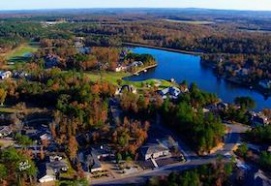
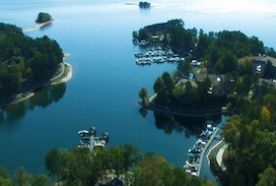
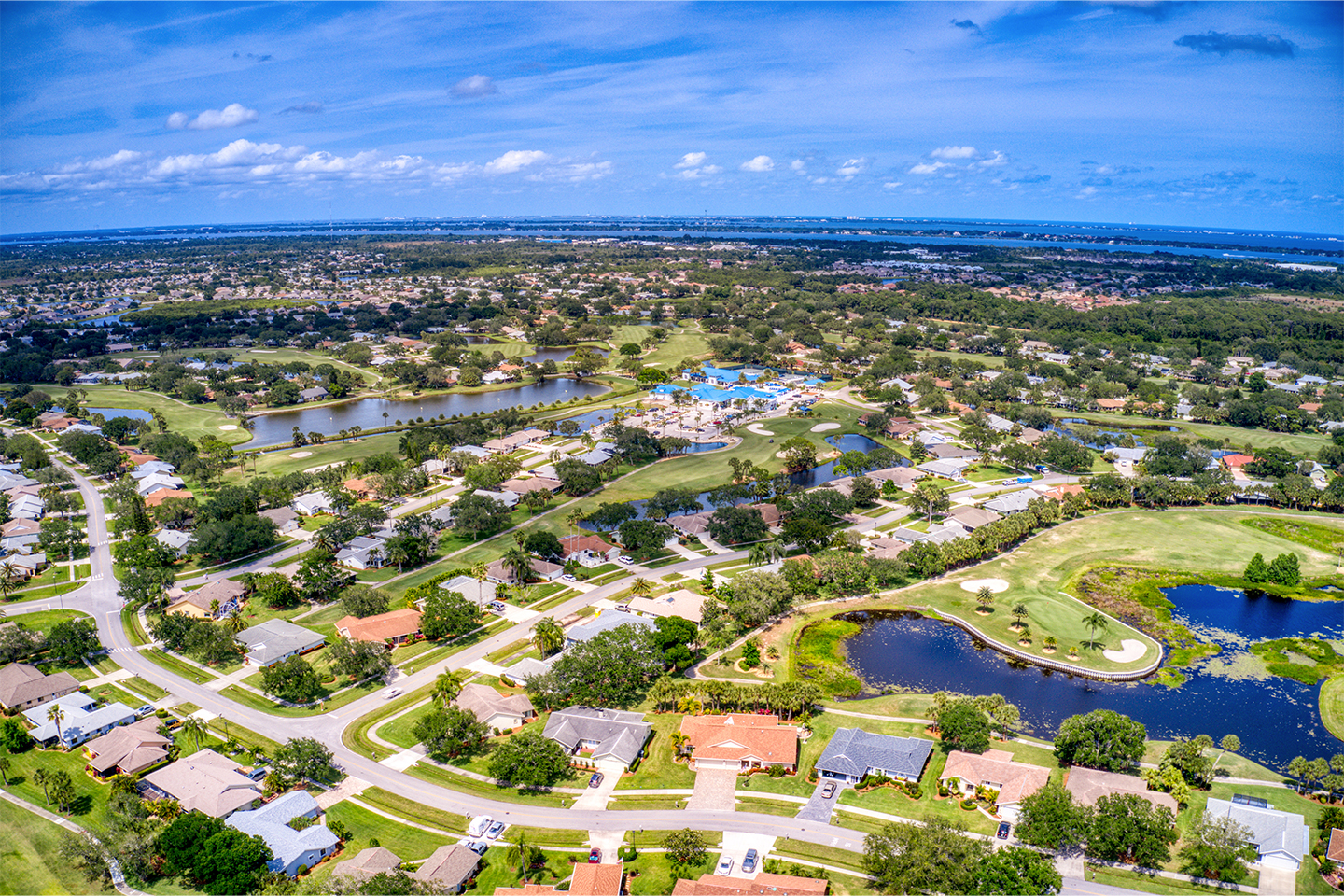
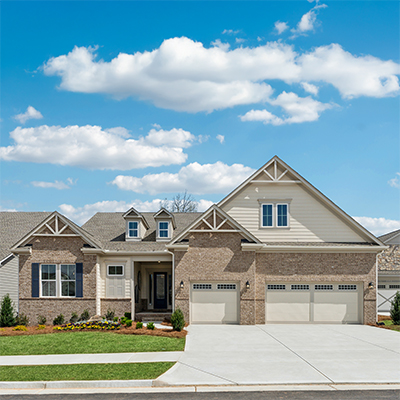
The format here is that we will print out each question, and then give the answers from each of our 4 active adult community executives. Thanks to them for taking the time to share their expertise! (See end of article for a photo of each community!)
1. What would you advise baby boomers as the best way to explore an active adult or 55+ community, particularly if they are hesitant about one that is gated? Do you have any other advice for boomers to get the most out of their site visits?
Dannet Botkin, President, Design Group Consulting on behalf of RE/MAX of Hot Springs Village, Arkansas
RE/MAX of Hot Springs Village offers a no obligation tour of the 26,000 acre Hot Springs Village community. Our gates provide security, not exclusivity. Although the Village offers real estate options over $1MM, we also have homes starting in the $100,000s with the average home price of approximately $250,000. The low cost of living along with affordable property taxes, mild climate and great variety of amenities from 11 lakes to 30+ miles of nature trails, 9 golf courses, farmer’s market, performing arts and more make Hot Springs Village the best place to retire.
Beth Kuberka, Marketing Manager, Tellico Village, Tennessee.
I would look online to see if they had a Welcome Center and set up a meeting or a tour if they are available.
Raoul Rushin, President, THE LANDINGS COMPANY, Georgia
The Landings near Savannah, Georgia is certainly in the active adult category with a full range of ages, from young families to seniors. Like many of such gated communities, the task of exploring them given their size can be daunting. The Landings is 6,500 acres with many miles of roadway weaving among 4,000+ homes and many obvious and some more hidden amenities. Our sales team is comfortable and used to working with those interested from 6 months to 5 years or more – they know that there is no pressure needed but can be a critical factor is giving interested buyers full exposure to how The Landings may very well meet their needs.
Kevin McCracken, CGM, Keowee Key, South Carolina
Keowee Key gate attendants are typically ambassadors for the community, so I’d recommend approaching the gate and simply inquiring about how best to check it out. You might be surprised to find they anticipate such questions and already have a program in place to accommodate interested buyers. I would also encourage boomers to interact with the residents of any community, including Keowee Key, prior to moving in. Don’t take the word of a Realtor or sales agent, get a feel for the community by renting first, or by visiting on a Discovery Package.
2. What do you think is the single amenity or community feature that makes your property a different and better place to retire? (it is probably the reason why they choose yours over the competition).
Dannet Botkin: The 9 unique golf courses of Hot Springs Village make it a golfer’s paradise. RE/MAX of Hot Springs Village provides discounted golf.
Beth Kuberka: Cost of living and the 4 distinct seasons.
Raoul Rushin: Given our private island location and its inherent beauty along with six championship golf courses, 2 deep water marinas, four clubhouses, tennis, pools, dining, Bocce, Pickleball and so much more combined with literally 100’s of groups of every interest to connect socially; the island alone would offer most everyone an answer to their needs. When combined with our proximity within a short drive to historic Savannah and all it offers, it’s a “one, two punch” that’s hard to beat!
Kevin McCracken: Without question, Lake Keowee is our most attractive feature. Combine this pristine lake with our established community that is rich with amenities and you have the perfect locale.
3. Is there one amenity or feature that people coming to your community ask for that you can’t provide them?
Dannet Botkin: Not often, we have tennis, pickleball, golf, lakes, marinas, beaches, an RV park, dog park, bocce ball, softball, lawn bowling, fitness center, performing arts center, nature trails, veteran’s memorial, community events, farmer’s market, artisan market, rod & gun club, outdoor adventure club, over 20 restaurants and more.
Beth Kuberka: Walking and hiking trails are big and we have those and are in the process of expanding them as well.
Raoul Rushin: Almost never but we do not offer equestrian facilities on our island.
Kevin McCracken: Our menu of amenities at Keowee Key is so varied, that hardly ever happens! We don’t offer equestrian facilities but can direct people to nearby stables if that is an interest.
4. Looking at your crystal ball, what is the biggest recent change in the active adult market you have seen or think is coming?
Dannet Botkin: Internet access and technological advances are at the top on list along with walkable options, adventure sports and the financial soundness of the community.
Beth Kuberka: People seem to be downsizing more now days.
Raoul Rushin: I think in my 25 years, the recession we most recently came out of had a huge impact on their conservatism in regard to their home choice (size, price, etc.) and their interest in making sure that their community of interest is sound financially.
Kevin McCracken: I believe integrated technology is an expectation that will only continue to grow. Seamless use of technology across all amenities and user platforms is essential to providing an enhanced member experience. The challenge for retirement communities will be to manage the transition as the more “seasoned” generation is replaced by those accustomed to technology as a means of obtaining information and communicating.
What do you think? Do you thoughts about these questions — how to visit a community, what amenities or features you are looking for, and how you think the active adult/55+ community should change to meet your needs? Here is your chance to tell the marketers what you are looking for in the Comments section below!

For further reading:
Member Survey: Single Floor Living, Social Interaction, Walking Trails Dominate Buyer “Wants”
A Short Visit to Kiawah Island Seabrook
—




Comments on "Best Way to Visit an Active Adult Community? Advice from the Pros"
Linda says:
I visited a Del Webb community about half an hour from Charleston on a 2-night stay package. I was assigned a sales rep who was not interested in spending time with me and was never available when I came back with questions after touring the models. The other reps would not talk to me or answer my questions, so apparently they all work on commission and the one I was assigned to didn't need the money.
I liked the unit I was in. It came with a golf cart and it was fun driving around the community in that. They assigned a resident to take me out to dinner one night who was a much better rep for the community than the alleged sales rep.
The other thing I did not care for was that to build a home that looked like the model would take approximately $100,000 of upgrades. And some upgrades were simply not available, like a hand-held shower. So it was not really a custom-building experience.
Ultimately I decided the community was out in the middle of nowhere and not what I wanted.
Smokey says:
It's a total misnomer to assume that any community having a golf course and clubhouse will be a low cost place to live. I've lived in one of these in the past and learned the hard way that the HOA dues during the opening stages are drastically lower than they will be once the place is built out and turned over to the homeowners.
Also, many of these places are designated as private property, so the entire internal street and road system maintenance and upkeep is paid for via huge special assessments levied on the homeowners.
Clubhouses are another nice amenity, but for some reason as new homeowners move in they often want to "make the clubhouse better" and press for an unnecessary and very costly renovation, and this cost is also levied on the homeowners via an assessment.
HOAs can serve a worthwhile purpose, but the bulk of them have a tendency to morph into nothing more than a way for some overbearing homeowners.HOA board reps to invoke their personal preferences on the community.
Don't become overcome and blinded by the amenities while searching for a retirement community or you'll regret it, along with having your finances drained at some point.
Tony says:
Another concern for me is the Age of a 55 and over community . The older the the community the older the residents. A new community residents are more my age 63 not that older is a bad thing just not for me. A community that was developed in the 80's well you get it !
Stu Williams says:
My wife and I recently stayed at an Airbnb within a gated NC community and it was wonderful getting real discussions with real residents at the clubhouse and restaurant. A wonderful way to experience a community.
Curt B. says:
I'd like to know what's a good time frame for beginning to look at properties. I've been checking out online websites already. Is 1-2 years out too early? What's a reasonable point to begin visiting? Thanks
Imme says:
If t is posible RENT for at least a year before buying! And if you dont like that community after a year, rent in another! Also, carefully review the HOA ruls with your own lawyer and also learn what state laws apply to HOAs. If more people simply said "no" to buying in communities with unreasonable HOA rules and fees maybe they will start to be more homeowner friendly.
LS says:
What the pros didn't mention in their answers was what is nearby outside of these communities. Many of the large ones that I am familiar with are very remote. If I liked a community, I would also be asking how close is the nearest grocery store, medical facility, auto dealership, doctors offices, gas station, etc.
Rosemary says:
I've been researching for 55+ communities on the East Coast but "still haven't found what I'm looking for." Is there such a thing as a real estate agent who is versed on ALL communities (and not just the big names), that can work on a more 1-on-1 basis to help me decide? (if not, hey, there's a good occupation idea for someone!)
Laurel says:
We've lived for almost ten years in an all-ages community that was recently taken over by the HOA. As other posters have said, board members are, without exception, newcomers. On the one hand, I praise them for having the time and desire to want to take on the responsibility. On the other hand, it is the same faces all the time pushing their desires, and they seem to be intent on stirring things up and creating problems where none have existed for over a decade. With all that said, I still personally believe that HOAs are a good thing, and to all who desire to serve, I commend you, but please move slowly as you attempt to make significant changes.
Bon says:
Hey Curt B., As to your question about when to start checking out places...I started a few years ago and won't be retired for 2 more years. It depends on whether you have zero idea of where you want to be or are pretty sure where you want to be once retired. I have looked at TN communities, AZ communities, IL communities, and AR communities. It takes time and money to do this kind of research, so wise to spread it out a bit.
Scott says:
The responses from the "Pros" in this article were nothing more than a sales pitch for their communities. When I opened the article, I also opened a document to take notes. I ended up with a blank document. The comments above from the readers were the only thing that came close to advice. Take a tour, speak with local residents not just the sales rep, investigate the HOA, and look beyond the boundaries of the community into it's surrounding area, amenities, and facilities.
To Curt B: In my opinion, it's never to early to start looking. I started putting together a list of cities/towns I would like to investigate several years before I retired. Having recently retired, I have now visited all of them (about 15) which has taken almost 2 years. Some that I thought would be high on my list were not, and some impressed me more than I expected. I am now in the process of revisiting the five I liked the most. On round 2 of my visits I am now visiting / touring communities with a sales rep. Once I've narrowed it down further, I full intend to rent before I consider buying.
Curt B. says:
Thanks to all for your input.
I'm pretty sure that I'll be making SW FL the destination.
Narrowing it down just beginning.
ella says:
Scott,
I agree, and was disappointed by the responses, except for Tellico Village. Those were pretty decent. Way to go Beth Kuberka!
ljtucson says:
HOA/55+ Community Shopping. If under builder control, know that some amenities like golf & restaurants are subsidized, these might become money pits later. Smaller the community the fewer the home homes to spread the amenity costs. Financials strong? What is the size of Reserve/Replacement fund for future repairs especially if roads are the responsibility of the HOA? How are new amenities paid for? What is the history of HOA fees, and have there been any assessments? Work with a realtor who knows the ins and outs of the surrounding area communities. Walk around the clubhouse, ask questions of residents. A stay and play is a good idea to help you get the feel of community. Read the CC&Rs to understand the covenants of the community, what rules are you NOT willing to live with. Rules that control what plants/trees are allowed, what paint colors, what lighting, where you can park, etc. Some are built very far out in the country so take a good look at access to dining options, medical facilities, groceries, cultural events...any transportation alternative. Look at how it is maintained, chipped paint, old pool furniture, water stained ceilings, etc. If it is gated, this will add many costs to the equation in HOA fees. Ask about average age of residents, if the community is +20 years old it may slant to the 80+ about now, some of these communities are now turning over and are good buys for resale homes that can be bought for less and now upgraded. Lots of considerations. Definitely if you are unsure, rent a furnished home for 1-3 months and get a vibe for the community and how you fit it. The greatest positive is generally friendly people, new friends, lots to do now and in the future as your needs change, opportunities for fitness and learning right in community. But baby boomers like to "get out" and explore so don't just look inside the gates, look outside.
Scott says:
Excellent post ljtucson! Now my blank document actually has something on it !!
Jackie says:
It was disappointing to read the responses from the 4 'executives', who only seem to be interested in selling their own communities.
We started to actively research communities a few years before we were planning to make the move. Our first step was to narrow down location. Next came the on-line search for communities in the possible regions. I requested information packets from those that appealed to us, and from that information we developed a list of 12 communities that we wanted to check out. At that time it started to look like we were focusing on Central Florida. On-sight visits were next. We did 2 different 'stay on property' visits, and ventured out to check out other communities during those visits.
Some of the things we noticed and considered when choosing our community: Average age of current residents; level of activity at the community; variety of clubs/groups; overall appeal of the property, common areas, clubhouse; current HOA fees, last increase, fee history; what the HOA fees cover; age restrictions and visitor limitations; are short term rentals allowed; are the majority of owners full- or part-time residents. On our visits, it was easy to get a feel for how friendly and welcoming-- or not!!-- a community was! Specific to location, we looked at things like where the nearest grocery store was, and made sure there were things to one you were off property!
Admin says:
Was wondering how come your 55+ Active Adult Communities Directory has so many (or even mostly) "all ages" communities? Am looking for an active adult community. Maybe I don't understand the lingo, but am looking for adult retirement living. Is there something I don't understand?
(This Comment came in from Mary). Here is our response:
This is a great question, one we get a lot. We will try to explain.
There are all kinds of communities suitable for retirement, and Topretirements tries to list as many as we can find (we also encourage developments to list with us).
Some are 55+ (or occasionally 50+) where at least one of the residents has to be at least that old, and children are generally not permitted to live there permanently.
Independent living, assisted living, retirement homes, and Continuing Care Retirement Communities (CCRCs) usually have age restrictions but by definition most residents are at least 55+ and usually well over that. Doesn't sound that you are ready for those yet..
Active adult communities might or might not have an age restriction. This is the primary kind of community we want to list on this site. If they admit people of all age, we check off All Ages so folks know there are no restrictions. Oddly enough, although we have 49 separate "Types of Communities" available in our database, up until now we did not have a specific category for Active Adult, now added thanks to your suggestion.
We also list communities that are open to people of all ages that are not necessarily Active Adult. It can be a judgement call whether or not to include them. Our criteria is that if they have some amenities and seem to be a good place for people over 50, we will include them. That might mean families live there too, but generally most of the residents are over 50.
Hope this helps!