Retire in an Area Prone to Hurricanes?
Category: Retirement Real Estate
October 16, 2018 — Here is a conundrum facing many retiring baby boomers, particularly those from the Northeast. You dream of escaping cold winters and snow, and replacing those annoyances with warm winters, sandy beaches, and being outside in shorts all year round. But, the Eastern and Gulf coasts of the U. S. come along with a big problem – hurricanes! This article will explore the issues associated with retiring to an area prone to hurricanes, a danger that recent history has shown to be a growing and very serious threat.
To tackle the issue we’ll break it up into three parts: what to think about before you move to an area with hurricane potential, steps you need to take if you do buy or rent in one of those areas, and the issues you need to prepare for if and when a hurricane threatens you and your home.
Hurricanes
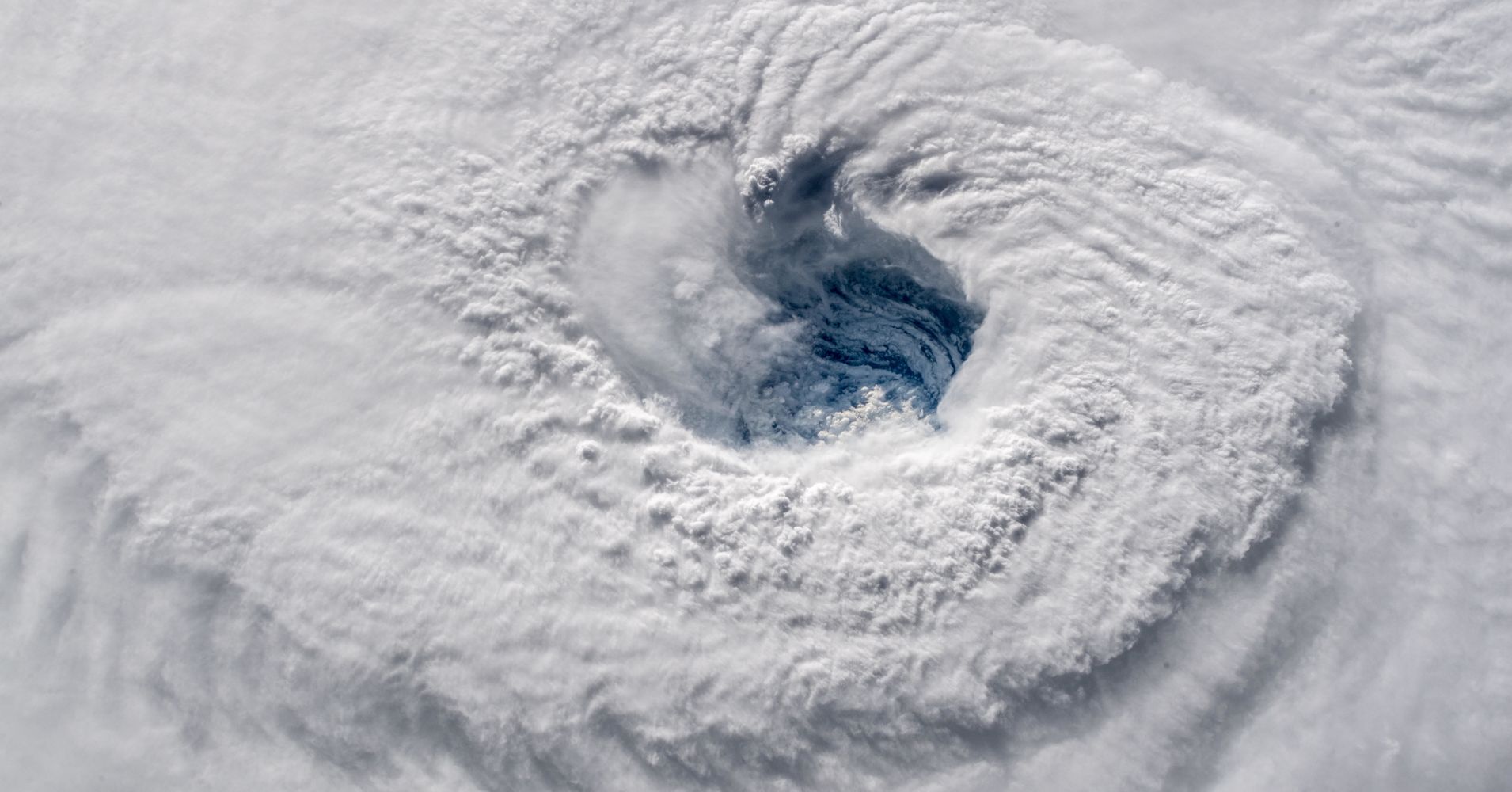
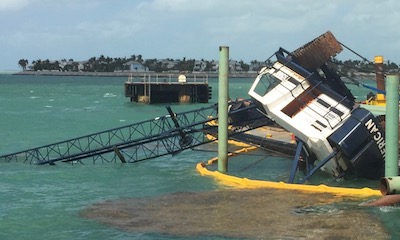
Hurricanes threaten the entire east coast all the way from Florida north up to Maine, and west along the Gulf Coast to Texas. The threat is growing more dangerous thanks to climate change and as the oceans store more and more energy in the form of heat. In an average season we see 6 hurricanes, and 2.5 of those are Category 3 or higher. In 2017 there were 10 hurricanes, with 6 of those considered major storms: Irma and Maria were both Category 5 storms and two of the strongest on record. As Hurricanes Florence and Michael proved in 2018, areas far away from the coasts can also be impacted. Note that wind is not the only hurricane danger – storm surges come in quickly and silently – a sudden wall of water can be 10 feet high, inundating everything in its path. Other dangers in these areas are king tides, rising water levels, and flash floods which can close roads and threaten homes.
Consider these out before you buy
If you are seriously thinking about moving to an area where there is a good chance of a hurricane, and that covers a lot of territory, here are some things to think about.
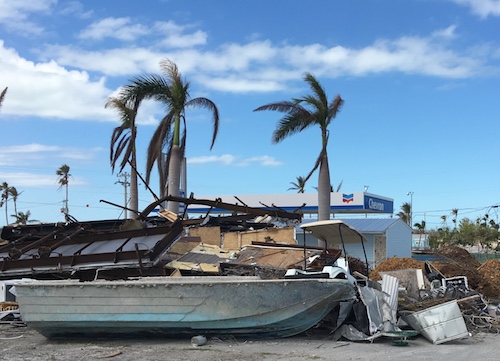
– Research the area. Find out how many major storms have affected it. What was the level of devastation? Did it include flooding or storm surges that might likely happen again? Hurricane Michael just proved that just because an area hasn’t been hit before doesn’t mean it won’t be.
– FEMA maps. These are a good way to evaluate the risk of specific areas and lots. They show the areas identified as flood zones. Recognize that the maps are updated periodically as water levels rise – we know people whose lot was considered safe, and then a few years later re-classified into a flood zone.
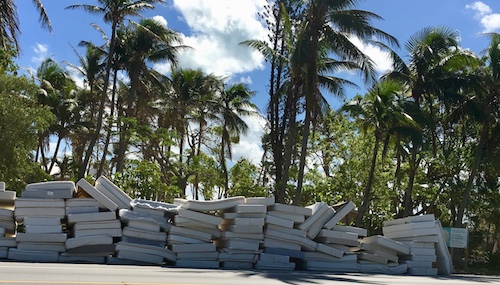
– Burned once might be better. In some ways an area that has experienced severe hurricane damage might be a safer bet than one that has not. That’s because mitigation has taken place – bridges and other infrastructure were rebuilt to better withstand catastrophic weather. Newer homes and condos are built to a much more stringent code. Local officials have experience in dealing with the aftermath.
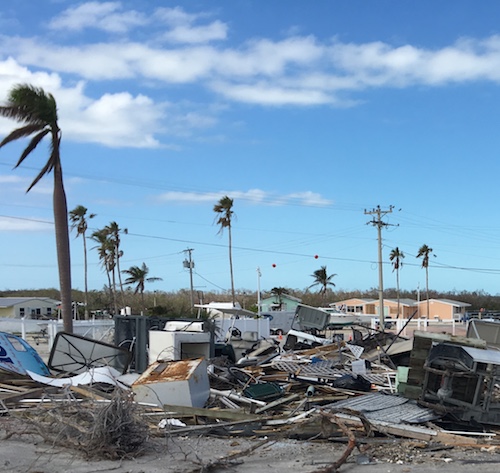
So you decided to buy, how can you minimize the danger and risk?
– First, don’t buy anywhere until you know how well the building was constructed. What was the year of the building code it was built under (they differ by state and even within a state)? What is the reputation of the builder? How did it fare in previous storms?
– Rent vs. buy. The safest thing to do is to rent and not buy. That way if there is a damaging storm you can walk away, leaving your landlord to deal with the nightmare of rebuilding.
– Think about buying in a development or condo. If you are part of a community you might be better off than if you own a home independently. That’s because the community probably has insurance on the exterior of your building, and it can pay for resources to repair and clean up infrastructure. But it is worth it to explore what kind of insurance the community has and how strong its reserve funds are.
– Better than code. If building from scratch or it is not finished, build better and higher than code. Along the coast, 12 feet above sea level used to be one standard (depending on flood risk) – it is now more likely 13 or even higher. This FEMA page of requirements for elevated homes has a lot more on this complex topic. The cost to go beyond code does not usually mean a huge cost increase, but it could pay off for insurance and safety reasons. Even if your home is an existing one, you can still do retrofits that will increase your safety and reduce the risk that comes from wind or water destroying your home. Those include impact resistant windows, rolldown or other types of shutters, stronger doors (homes with strong windows have been damaged because their doors were not), and roof and foundation tie-downs. See “Related Reading” below to find out more about how one specially built house in Mexico Beach remained one of the few undamaged homes in Hurricane Michael.
Find out your insurance costs before you buy
Ask your real estate agent to get copies of all insurance bills, and know what was covered. Or ask your current agent for a quote. If the property currently has government flood insurance, will you be able to renew it, and what will the cost be? Can you get wind insurance, and at what cost? Note that most policies in coastal areas specifically exclude flood and wind damage, the two dangers you are most likely to experience. At least from an insurance perspective, many homeowners would be better off if their home is hit by a wildfire or volcanic eruption than in a hurricane. In Florida, Citizens Property Insurance is the insurer of last resort, and sometimes your only option.
How to Prepare for a Hurricane
So you decided to buy in an area with the potential of hurricanes, and you prepared your home to try to withstand it. How can you be prepared when one comes anyway?
– Have a hurricane preparation kit. Have a (usable) stock of emergency supplies on hand, such as food, water, solar recharger, radio, etc. Have a plan for where you will go, and a full tank of gas. Get a generator. A full house generator will probably cost $10,000 or more to get installed, but might be able to run for a week without refueling. Portable ones need to be operated safely.
– Listen and obey warnings and orders. If the governor says to evacuate, get out (early!). In Mexico Beach, as of this date dozens of the 289 people who stayed despite evacuation orders are missing. We know people who stayed through Hurricane Irma when it hit the Florida Keys last year. Most say they were glad they stayed because they could get a jump on cleaning up the damage. But the risk of being killed or injured with no available medical care in one of these storms, plus the major inconvenience of spending weeks without power, water, or supermarkets makes it seem not worth it. Plus, if you stay when you were told to leave you are just in the way, and no one is obliged to help you.
– Be ready for winds, floods and storm surge – even far from the coast. When Hurricane Wilma hit the Florida Keys in 2005, people who stayed through it thought it had passed, and they had escaped. Then 4 feet of water swept through in a matter of minutes. In 2018, some of the worst hit communities from Hurricanes Florence and Michael were those far from the coast. These places were not prepared for a state of emergency that might last for weeks.
– Have a contractor plan. If a hurricane hits your area there is going to be significant damage. Even landscape damage can be difficult. Trees across your driveway, fences downed by debris, roofs torn off or damaged. Finding an honest contractor (after a big storm there are lots of unreliable ones) can be a nightmare. If you have an existing relationship with a reliable contractor or handyperson – cultivate it! Permits to rebuild are another hassle. Keep your plans handy and be prepared to hire a professional to help.
For further reading
Worst Places to Retire for Weather and Natural Disasters
2017 Hurricane Season Has Plenty of Lessons for Rent vs. Buy Choice
Built for the Big One – One House Remains on Mexico Beach
Eyewitness Report: Hurricane Michael Hits St. Vincent Island and Tallahassee
Comments? Please share your thoughts in the Comments section below.
Are you concerned about moving to an area prone to hurricanes?
Please share your thoughts and concerns as you go through the process of deciding where to retire.


Comments on "Retire in an Area Prone to Hurricanes?"
Marlene Harris says:
For the past 5 years or so, my husband & I have been considering moving to the Gulf coast area when we retire. More recently we've been checking out the Pensacola area. However, given the number, size, and general nastiness of the storms that have rolled through Florida over the past couple of years, we're rethinking that idea and considering staying here in Arizona (just traveling more instead). We get some crazy weather here in AZ on occasion (heavy rains, big winds, rare microburst), but nothing ever approaching the severity of the hurricane events around Florida coastal areas. Apparently, that old saying about "the grass isn't necessarily greener..." is true!
says:
This comment was moved from a different Blog to this one for a better fit:
I lived in South Florida for 18 years. Every year the hurricanes threatened my life there and some of them actually stopped my life while moving through. It is a stop because you and your family worry as each bulletin comes over the tv. You load up on supplies, board up windows, sandbag, and hope it all isn’t needed. None of it is fun. It is costly, and if you have to evacuate you spend hours on the road and then more expense holing up in a motel if no friends or relatives are close. I lived in Homestead. It was decimated, just like Mexico Beach. You can’t come back. You have to rely on donations of food and water and find a temporary home until you and the insurance agency can come to an agreement. You have to have monetary reserves for all the unexpected expenses and lose things you have had all your life. So, take heed. It isn’t like falling off a log. It is personally devastating and I will never live close enough to spend another day on hurricane watch.
by PamE — October 16, 2018
Jack says:
I understand Jane in the above note. We live slightly inland in coastal Charleston, SC. We love it here and fear the same TV /hurricane messages. But we stay.
The only thing I can say similar to Jane is it is like having a beloved pet. You have them for maybe 15 years or so. You know that they are going to die. But the pleasure they bring you for those 15 years or so are worth the heartbreak when they leave. You are crushed. You are in pain. You are a wreck for a long period. You say you will never get or love another pet for the rest of your life. But eventually something happens and you do. Someone brings you something that needs love, or your former veterinarian calls and tells you a pet that reminded him of your previous pet had a litter and the owner needs your help and will gift you one. What do you do?
You ignore the hurricane warnings and return to the “danger zone” of what you love and need and begin anew.
Sandy says:
Loved Jack’s comments! We were Florida snowbirds for 13 years in the middle of the state. We have just made the big move full time to the gulf coast near Venice. In the center of the state, there were tornadoes to worry about. I may change my mind but right now I will take the risk to be 6 miles from the beach. The new hurricane standards are pretty stringent and hopefully we would have little or no damage. During hurricane Irma, one pool cage in our community was damaged. Everyone has to decide what they are comfortable with doing.
Maimi says:
Sandy, never, ever underestimate the danger and devastation of hurricanes! Sounds l8ke you have never lived through one. Good luck in your new home, but I just don’t want you to think that a hurricane is comparable to a wind storm that blows your pool cover off! Just make sure you have an evacuation plan.
Toni says:
It really doesn't matter where you live these days. Places that "never" flood are flooding. Fires are decimating our forests and homes in the West. Hurricanes are getting stronger.....I could go on and on but that has never stopped me from living where I am happiest. I was born in California and experienced earth quakes. I was raised in the Florida Keys and experienced hurricane "Donna" in 1960. Then I went to Anchorage, AK for many years and felt some really strong earthquakes and just missed a couple of avalanches along highways there....lived in Texas for over 25 years and there is nothing like a Texas tornado. After all that I loved every single one of those places and wouldn't change a single memory. Now we are retired in Fort Myers, FL. We live about 25 miles inland from the beaches because of the cost of homes on the water and expensive various insurances (flood/home). We were directly hit by Hurricane Irma with very little damage. It was a Category 3 when it hit us. Living a bit inland we do not have to worry about storm surge BUT when picking out a community it is wise to check out their history of local flooding. Fortunately our community weathered the storm very well and not one home had flood waters. We live in a newer (6 yrs) house that is built to Miami building codes,have an evacuation plan and keep supplies on hand year around. We also invested in electronic shutters, etc. etc. If you do your homework on living in Florida, it is a great place to live. With that said, if we are ever faced with a Category 4 or 5 hurricane in Fort Myers, our car will be the first one on the road North outta here!
Sandy mueller says:
Maimi, Yes, we were here for a hurricane. We also were in Hawaii on the 17th floor of a hotel once for another hurricane. Hurricanes are incredibly frightening but maybe because I grew up in the Midwest, tornados scare me the same. I have an evacuation plan. I have all the things they recommend for a hurricane. I still intend to be gone when one comes though. I realize I am fortunate that I can leave.
says:
We moved the last couple of comments that discuss living in Fort Myers, Florida, to a different Blog:
What is the Better Part of Florida for Retirement: Coast or Interior:
https://www.topretirements.com/blog/great-towns/what-is-better-part-of-florida-coast-or-interior.html/#comment-309573
Linda says:
We survived Irma with not much damage. Got a new roof and a new perimeter lighting system. Where I lived before, there were destructive tornadoes. Bad weather can hit anywhere. Forest fires, earthquakes, etc. I'm staying in SE Florida.
Rich says:
https://www.tallahassee.com/story/news/hurricane/2018/10/14/hurricane-michael-arc-ruin-trail-destruction-florida-panhandle-big-bend/1614787002/
Skip says:
We moved to SE Florida coast one year ago. We couldn’t be happier! The cost of living is lower, utilities cheaper, and waking up each day now is like waking up in paradise We love boating, swimming, fishing, outdoor concerts year round, sitting on the dock of the bay restaurant enjoying an ice cold beer and watching a football game being played in the snow. We are close to Fort Lauderdale, Miami, Keys, the West Coast, Bahamas, Palm Beaches, and our beach Life is great.
Virginia says:
OK Skip I’m in! Can you tell me the location & name of your piece of paradise, thanks
Alan E says:
Thanks, Skip.
Its good to hear favorable impressions and experiences. There is so much spoken gloom and doom, it becomes disheartening.
Its gratifying to hear paradise still exists, in the flesh and the mind.
A small sliver from this side of heaven will be mine very soon.
Again, thank you, Skip.
Gary Burris says:
My wife and I moved from Yuma Arizona in early 2017. We have had one hurricane pass just east of us in Sun City Center (2017). Lots of rain and wind but nothing we hadn't experienced in Yuma. Another hurricane passed to the West many miles recently. We did have clouds and some rain, maybe 1/2 an inch but little wind at all. We now love in On Top Of The World in Ocala Florida. Our home was completed in January 2018 and is built to the most recent building codes. Being inland the risk of damage is much less than in coastal areas.
Our cost of living is reduced and we are closer to family.
Admin says:
Whew, power and internet back after 3 days! We live in CT in the summer and Tropical Storm Isaias just about did us in. Much stronger winds than predicted, almost the whole state without power. Fortunately it struck as the tide was going out or it would have been worse. More and more dangerous storms predicted - seems like no place is safe. What we learned from this storm is we need a better emergency kit. Out old camping lantern needs D batteries, we need to go LED!
Maimi says:
I am in a gated condominium community on the bay in New England. The storms aren’t getting any worse, but the antiquated electrical grid goes out with the slightest breeze here. Nobody takes responsibility to trim the trees over the power lines, and even the slightest rain storm brings tree branches down on the power lines. In the past 10 years, there have been numerous times when power has gone out for a week or more. We all have total electric, including heat, and the HOA will not allow generators. It is starting to get life threatening for me, as my health has not been good. An emergency kit doesn’t do much after a night in the winter with no heat. By the way, has anyone discovered a battery operated coffee maker, or a battery operated indoor generator?
LS says:
If you have a garage or basement, you could have a Tesla Powerwall, or similar, installed. This battery can store enough energy to run your refrigerator and lights for up to a week depending on the size of the battery. It is not cheap but it does not make noise like a generator.
Peder says:
Thanks, but I'd rather take my chances with the spotty tornadoes of the upper Midwest.
Lynn says:
So, we went through Hurricane Irma, here in Central Florida. It really wasn't a big deal storm, here. Yet, it ended up costing a lot and causing the power to go down for a long period. Mostly that was because Duke Energy hadn't really prepared. As with Maimi's experience, they hadn't taken care of tree trimming. (They had even cut the budget for the activity after they bought our power company). They provided no charging stations for folks without power. They did a terrible job of communicating, via social media or on their emergency lines about outage statuses. As a result, there was a huge negative response in the media and on social media. Many of us wrote letters to the editor and posted on Facebook. I suggested to our insurance company, which had to pay for our spoiled food and the like, that they sue Duke. I do believe that Duke learned its lesson. They have spent the last two years trimming trees, fixing power lines, and improving their response time to power outages. Make noise and use social media. Sometimes these utilities do respond.
Jennifer says:
I live in Washington, DC and we often are affected by the storms that move up the coast. Power continuation during bad weather is a very important component in any community and I am glad to be reminded of it. In my co-op our five buildings have power lines below ground. We had one building that was above ground and converted it also. Before this we had almost two weeks without power one June after a severe storm in that one building. No A/C in a hot summer can be a killer here, not to mention other life saving devices.
Dick says:
Lynn, I have lived on the Carolina coast for over 30 years so have experienced many hurricanes. I have never heard of the power company providing charging stations. How would they do that?
I doubt if Duke Power is concerned about being sued for food lost. Is the power company responsible for trimming trees or is it the property owner? I think the latter.
Improving response time for outages? They bring in as much help as possible before and after a hurricane. I'm sorry if you are a bit inconvenienced after a storm but they are doing the best they can.
And Peder, a tornado gives no warning while you have plenty of time to prepare for a hurricane. I'll take a hurricane over a tornado any day.
RichPB says:
Dick, I don't agree. Duke has responsibility to trim/remove trees in their rights-of-way which includes near any overhead lines. Duke has stated (in fact, demanded, that in our heavily, tall tree community) that they MUST do this. (Their sloppy trim procedures are an issue.) For me to trim on my property might be fine (and very dangerous), but in 27 years here, it has never been trees on my property that were a problem despite many outages. The problem is often miles away.
Maimi says:
Well, we have National Grid, which is the absolute worst ever! We do have underground lines for our large gated community, but the main roads that feed us do not. I just was told by National Grid that they are only responsible for tree trimming once every seven years, which is insane in New England. Nobody takes responsibility and the effects are devastating! When people are expected to live a week or more with no heat in the winter, it is life threatening. I don’t know what the solution is.
Larry Gavrich says:
My wife and I just spent five days without power -- in central Connecticut. I raise this to make the point that the effects of hurricanes, and poor planning by utility companies, can make life miserable far from the coast. Every year during hurricane season, I write an article at my web site or in my monthly newsletter reminding that the odds of a serious hurricane -- more than 75 mph winds -- slamming any one point on the coast are still rather remote. For example, hurricane modeling shows that Savannah, GA, should suffer a major hurricane between once and twice per century. (Look on a map of the east coast and see how far west Savannah is from the Gulfstream, which tends to whisk hurricanes up the coast toward the Carolinas). But even in a place like Myrtle Beach, there is just a 2.6% chance of a major hurricane in any one year, or a 10% chance of any hurricane at all. (Source: Hurricane Watch, by a former director of the National Hurricane Center.) My wife and I have owned a vacation home for 20 years; it is 3/4 mile from the Atlantic Ocean in Pawleys Island, SC, and that area has suffered through a few hurricanes the last two decades. But our most severe "damage," if you could call it that, was a couple of leaks that stained walls and dripped on carpets. I blame shoddy construction, which has since been fixed, more than the heavy rain and wind. Bottom line: If you want to live on the coast, don't fear hurricanes. Just keep an eye on the Weather Channel during hurricane season and trust the local authorities. They have become very good at evacuation procedures, if necessary.
Billy says:
The utilities have cut their manpower to bare bones and rely on contractors in emergencies. So when a large storm hits they are busy and in demand from everyone affected.The solution, be as self sustaining as possible. Easier said than done though. Last week the Jersey shore lost power. I don't know what's worse, listening to a neighbor's gas powered portable generator running near your fence upwind from you 24/7 or living out of your cooler.
Maimi says:
Billy, in many of the planned communities, like mine, that senior citizens live in, generators are not allowed.
Uncle al says:
We live in Suffolk County, NY. There are still 50,000 homes with no electric, and indications are that there will be no electric until Friday (the 14th) ! National Grid...
Gerry says:
We live in Pawleys Island SC as well. Certainly there is a greater chance of hurricane damage but one can never predict what the weather will do anymore. Look at all the damage in the mid-west and in the northeast. There are problems and trade offs wherever you live. Just find a place that you really enjoy and meets your needs and hope for the best.
Ron says:
With rising ocean level due to global warming and increasing warmer oceans the potential for significant damage due to hurricanes and flooding continues to rise along the nations sea coasts and inland! Insurance rates continue to rise uncontrolled!
With our government refusing to act on global warming these threats will only continue to grow in the coming years!!
Gerard says:
Ron has a point but you can look at the glass as half empty of half full. The west has water issues, the midwest has tornadoes and is pretty boring. California is very crowded. Most large cities have high crime and are expensive. Although they have more cultural opportunities. Figure out what you like and where you want to be. Check it out and make sure it's for you. Don't let something that might happen stop you from living your dream.
Larry says:
Right on, Gerard. No place is paradise, but some places check most every box depending on your lifestyle inclinations. I assist couples looking for golf communities in the Southeast, and the first thing I counsel is to decide on topography -- mountains, coast, lake, or something in between (e.g. Pinehurst, NC). Obviously, one has to know a little bit about the climate in each area. If you want the beach nearby, you have no choice but to accommodate the threat of hurricanes, slim though that threat may be in many places (near Savannah, for. example). If you want the mountains, then there will be a couple of months in winter that you will feel as if you are in New England, although the snow melts faster in the Carolina mountains. Most lake locations in the Southeast are relentlessly hot in summer without the breezes of the ocean or the cooler temps of the mountains. If you can afford it -- double property taxes, possible double HOA fees -- the two-house solution provides pretty much of a perfect climate year round (but not many want the hassle or the costs of two homes). My wife's and my vacation home is 3/4 mile from the ocean just south of Myrtle Beach. We have had hurricanes but no severe damage. We have flood insurance, but it isn't too expensive (few hundred a year). Evacuation plans are excellent in SC, and The Weather Channel updates are relentless when a hurricane approaches (even a week in advance). I don't think I have ever quoted The Mamas and Papas, but it seems appropriate here: "Go where you wanna go...live where you wanna live..." Just be prepared (to quote the Girl Scouts.
RichPB says:
Gerard and Larry, very well put! Those who spend their lives worrying that every detail may not be perfect will never find satisfaction. Start with Larry's overview on choice, do your research, be happy and enjoy your choice and maintain some flexibility in the event any of the negatives occur. That's what is called making the best of a good retirement solution.
Florence says:
We’ve always been interested in retiring to the southeast, SC in particular. Lately, not so much. It’s called the “low country” for a reason. Serious flooding is becoming commonplace, effecting the quality of life there. Charleston county had numerous ordered hurricane evacuations in recent years. I don’t think, as an retiree getting older not younger, that’s something I want to have to worry about. Renting part time is looking better and better.