Dueling Mountain States for Retirement: CO, ID, MT, NV, UT, and WY
Category: Best Retirement Towns and States
— This article continues our Dueling Retirement States series with another regional comparison. See Further Reading at end for links to other comparisons in the series —
June 22, 2015 — Are you tempted by the lure of mountains for your dream retirement lifestyle? The Mountain States of the U.S. – Colorado, Idaho, Montana, Nevada, Utah, and Wyoming – continue to experience amazing population growth, including from people of retirement age. Colorado’s population, for example, grew by over 1 million people between 2000 and 2014, much of which was net in-migration. Many of these mountain states’ new residents are 20 and 30 somethings who have come for jobs in these growing economies. But another demographic segment flocking to the region for its beauty, outdoor recreation, and in many cases, to be near their adult children, is the huge baby boomer group. The attraction for many of these folks is the opportunity to enjoy magnificent mountain ranges like the Beartooths in Montana, the Sawtooths in Idaho, and the many sub-mountain ranges of the Rockies in Colorado. In this article we will compare and contrast these 6 mountain states: Colorado and Nevada, Idaho, Montana, Utah, and Wyoming (links go to our mini-retirement guides to each state). Population and income data is from American Fact Finder-U.S. Census Bureau.
A Few Facts
Colorado is by far the more populous of the 5 states. The 2014 population there increased to just over 5.35 million from 5 million in 2010, which is a 6.5% increase in just 4 years. There were 2.8 million people in the second most populous state, Nevada, up from 2.7 million in 2010 (+5.1%). Wyoming had the smallest population of the six, which stood at 584,000 in 2014, a 3.6% gain from 2010. Utah enjoyed a significant population increase from 2010 to 2014, 6.5%, double the overall U.S. growth rate. Its population estimate was 2,942,000 in 2014. Idaho had 1,634,000 people in 2014, up 4.3% from 2010. The Montana population was 1.024 million in 2014, up from 989,000 in 2010 (+3.5%).
Montana has the highest percentage of 65+ population of the 6 states – 16.2%, while Utah is the youngest state in this category with 9.8% of its population being 65+. The 65+ population in Colorado was 12.3%, compared to 13.8% in Idaho, 13.5% in Wyoming, and 12.0% in Nevada. The total U.S. % is 14.1%.
Economics and Home Prices.
Colorado and Utah tend to have the most expensive homes of these 6 states. Nevada and the Las Vegas area was one of the nation’s hardest hit regions in the 2006-7 housing meltdown. The other mountain states in this comparison were relatively immune to that crisis, probably because they were less overbuilt. Retirees looking for housing bargains should consider Idaho, which had the lowest statewide Home Value Index at $166,000. By comparison, the Zillow Home Value Index for the entire USA was $178,400 in mid 2015, a 3% increase yr. to yr. Source: http://www.zillow.com/nv/home-values/

[jcolumns]
State
Colorado
Idaho
Montana
Nevada
Utah
Wyoming
[jcol/]
2015 Home Price
$268,700
$166,000
$185,700
$197,500
$209,300
$180,000
[jcol/]
% Change
+10.9%
+.5%
-2.6%
+8.8%
-.9%
NA
[/jcolumns]
Home Prices by City
The highest priced Colorado Metro is Denver at $269,000 and the lowest was Pueblo at $107,000. Prices in the huge metro of Las Vegas stood at $169,700, whereas Reno was considerably higher at $208,000. In Boise prices were slightly higher at $182,300. Helena Metro home prices were among the highest in this group at $243,800. In Salt Lake City that Index was $244,700 and in Ogden it was $121,400. Cheyenne home prices were slightly higher at $189,100.
Cost of Living
The Numbeo.com Cost of Living + Rent Index is 74 for Denver, 64 for Boise, 65 for Salt Lake City, and 80 for Las Vegas. Since the Index for New York City is 100, that means all 3 cities are less expensive than the Big Apple, with it being cheapest to live in Boise. Unfortunately, data on cost of living is not readily available for many of the other cities in these states because of their relatively small size.
Climate
Although Nevada, Utah, and Colorado are close to the same latitude they do not share the same climate due to drier conditions in NV and UT and higher altitudes throughout much of Colorado. Idaho, Wyoming, and Montana tend to have similar climates, with northernmost Montana being the chilliest of the six. Las Vegas (NV) has an average temperature of 90 in July and mid 40s in January. Salt Lake City (UT) is cooler in summer with a July average high in the high 70s and a January average of about 30. In Denver (CO) those averages are low 70’s and 30, whereas up in Helena (MT). they average high 60s and 20. Boise is very similar temperature wise to Salt Lake City with its July average in the mid 70s and a January average of 30. Because most of these are very tall states, the climate changes from north to south.
Tax Environment Comparison
Nevada and Wyoming would have to be considered the 2 most tax friendly mountain states: neither one has an income tax. Idaho and Montana have the highest marginal tax rates, although Montana lessons that blow since it has no sales tax. Montana and Colorado provide some exemptions of social security from taxation, depending on income. Colorado provides a fairly generous exemption for pension income to people over 65.
Most of these states offer senior property tax exemptions of some type. Colorado, for example, has a very generous Homestead protection law which exempts 50% of the value for long term residents. Idaho has a similar circuit breaker program for those who meet certain income limitations. None of the mountain states have inheritance or estate taxes. The data below is from the Tax Foundation and Tax-Rates.org. For more detail about taxation and other information about each state see our mini State Retirement Guides.
[jcolumns]
State
Colorado
Idaho
Montana
Nevada
Utah
Wyoming
[jcol/]
Tax Burden
32nd
24th
38th
43rd
28th
50th
[jcol/]
State Inc Tax
4.63%
1.6-7.4%
1-6.9%
None
5%
None
[jcol/]
State Sales Tax*
2.9%
6%
None
6.85%
5.95%
4%
[jcol/]
Med Prop Tax**
.6%
.69%
.83%
.84%
.6%
.58%
[/jcolumns]
*Localities may add additional sales taxes
** On appraised market value
[jcolumns]
State
Colorado
Idaho
Montana
Nevada
Utah
Wyoming
[jcol/]
Taxation of SocSec
Yes
No
Yes
No
Yes
No
[jcol/]
Taxation of Pensions
Yes
Yes
Yes
No
Yes
No
[jcol/]
Inher/Estate Tax
No
No
No
No
No
No
[/jcolumns]
Where to Live by State
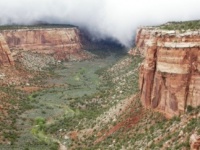
All of these mountain states are renowned for their outdoor recreational possibilities, with outstanding hiking, biking, skiing, fishing, and kayaking – among other activities. The more populous states like Colorado, Nevada, Idaho, and Utah all have a few larger cities to choose from and a range of other choices. For example Topretirements has reviews of 27 towns and cities in Colorado. In Montana and Wyoming we have 7 and 6 towns reviewed respectively, so your options are more limited. They all have interesting college towns to choose from, such as Laramie (WY), which is home to the University of Wyoming, or Boulder (CO), the upscale home to the University of Colorado.
Most popular retirement mountain towns
In this section we will list the most popular mountain towns for retirement at Topretirements. The # in parentheses is the popularity ranking on our Top 100 list.

St. George, UT (#42). Located in southern Utah, St. George, with its very nice downtown and warm climate, is becoming synonymous with retirement.
Grand Junction, CO (#56). People who have retired to Grand Junction cite the nice downtown, abundant local fruit and wineries, and many outstanding recreational activities within a short drive. About 60,000 people live in the city proper.
Denver, CO (#63). The Mile High City is a huge Metro with every kind of big city amenity, and charming neighborhoods and parks.
Reno, NV (#70). This is the 4th largest city in the state. There are 18 ski areas within 2 hours, and 3 major bodies of water – Lake Tahoe, the Truckee River, and Pyramid Lake.
Henderson, NV (#75). This town has the highest ratio of parks and recreation facilities per inhabitant of any city in Nevada. Very near to Las Vegas, it has a diversified economy too.
Durango, CO (#83). This exceptionally beautiful place is one of the towns in the southwestern part of the state.
Las Vegas, NV. (#84) This huge and famous metropolis can’t be beat for entertainment or a choice of lower cost living options.
Mesquite, NV (#91 ). This retirement town on the Nevada and Utah borders is in a beautiful desert.
Whitefish, MT (#96). Many people consider this one of the most beautiful settings in America – a nice town along a postcard lake and mountains looming above.
Boise, ID (#100). This bustling city is the 3rd most populous Metro in the Pacific Northwest. It’s nickname is “The City of Trees”.
Of course these are just the most popular towns on our list. There are many more interesting places to retire in these states which you can find in our State Directories.
Bottom Line
The mountain states all offer superb recreation and scenery. In general they are all reasonably tax-friendly, especially Nevada, Wyoming, and Montana. They have a range of places to retire, with Colorado offering the biggest number of towns to choose from.
For further reference:
State Retirement Guides
Gulf Coast Retirement: Sun, Tax-friendly, and a Lower Coast of Living
Retirement 101 Mid-Atlantic States: MD, DE, VA, NJ
Florida Retirement 101
Dueling Carolinas: NC vs. SC
Dueling States: Arizona vs. Florida
California Retirement 101
Retirement in the Southwest: AZ, NM, and Utah
Comparing the Pacific Northwest: Oregon and Washington for Retirement
Comments? We and all your fellow members love to know what you are thinking. Please share your thoughts about retirement in these mountain states in the Comments section below.




Comments on "Dueling Mountain States for Retirement: CO, ID, MT, NV, UT, and WY"
Dave says:
Just one correction: Idaho does not tax social security benefits.
We're headed there next year when I retire. We've always had a dream of retiring somewhere with great outdoor recreational opportunities, and Idaho definitely ticks that box. It will be a big change from southern California, but we're looking forward to that.
Dave
Editor's note: Thanks for that correction. No tax on SS in ID
Twilla says:
I can assure you that Salt Lake City/Ogden summer average is a lot higher than the 70s range. It's been in the 90s and it's still June. I'm not complaining but 20+ degrees is a big difference.
marvv says:
Sales tax in Nevada, is different in each county. Well over 8% to 7.1%. So beware if you need to make a major purchase. Sales tax can really add up. I have just recently settled in a small town 50 miles east of Reno, after wintering in Mesquite in a RV. I have come to the conclusion that no matter where you go each state needs money and they just have different ways to shake down the citizens.
Mark Pancoast says:
Idaho does not tax social security benefits.
Ed. Note: Thanks for that correction, now made in the main article.
says:
I absolutely love the mountainous areas of these states. However, I would like to STRONGLY encourage anyone considering retiring there (as I was considering Colorado up until staying there for 3 weeks last year) to please spend some significant time visiting at the elevation you plan to live. Altitude sickness is very real and may be more than significant for seniors.
We planned to stay in a beautiful condo at an elevation of 9500 feet with incredible views all around (Silverthorne) for a month last June. Because of the altitude sickness that I just could not shake, we were forced (regrettably) to leave after three weeks. The solution was simple -- move to 8000 feet or less. But, for me trying to live or sleep long term at altitude proved taxing and physically exhausting. My wife had no difficulties at all.
Altitude sickness is characterized by one or more symptoms of dizziness, intense shortness of breath, possible nausea and others. Usually people acclimate within a few days and the symptoms disappear. Unfortunately the shortness of breath was, for me, severe and never abated unless I went down to at least 8000 feet for a while. I could travel for brief times to any altitude (over 13000 ft. several times), but I could not stay. The shortness of breath was extreme -- walking across the room left me gasping. I had to rest after climbing a flight of stairs. My breathing was labored even just sitting or sleeping. I woke up exhausted every morning despite the fact that I use a CPAP machine for sleep apnea (the CPAP forces air into my lungs at a constant rate). In some ways, it felt like breathing with a plastic bag over my head -- not sealed but still difficult.
A few things about me: I am 67, I have heart disease and "sometime asthma" and have always had minor issues with my lungs -- nothing serious for the most part and it normally does not affect me at all. I experienced something similar to this as much as 20 years ago when hiking above 8000 feet. Elevation and, to some extent, with exercise is apparently an issue for me.
So don't change any of your plans other than trying yourself with your unique health history to live for at least several weeks at a higher elevation that you may consider moving to permanently. "Testing" any new potential retirement place is always a good idea, but high elevations could surprise you -- it certainly did me! There is a simple solution for me or for anyone. I will return to Colorado in a minute if I have the opportunity. I will just be sure to live at the lower elevation (8000 ft or lower) of Silverthorne rather than in the heights. But frankly, we visited with the thought we might move permanently to Colorado and for the first few days we seriously looked into buying one of the condos we were staying in (or even higher). Many things decided us that NC remains our ideal home, but we also eliminated a highly elevated home location or even vacation spot.
Jim Knox says:
I lived a significant amount of time in the Great Basin,notably Battle Mountain,NV,which is in the heart of it. I can understand all the familiar pros and cons of living there. I just want to say that if significant cold is not for you,don't move there. It is regularly below zero in January. I did linework and remember a week of -40 at night and <0 throughout the day. One year it snowed on the eve of the 4th of July. Also,significant wind is a way of life in the Great Basin.
Anne says:
Visiting my son in Steamboat Springs in winter I find they do not plow, shovel or salt as we do in Wisconsin - I suppose because it sometimes snows for days but also being ultra "green." So being afraid of falling I depend on Yak Traks which works great until you go into a store with hard (read: slippery) floors with no place to sit to take them off or more importantly put them back on. Incidentally this past winter I was quite shocked to see an area sprinkled with cinders! Lots of mid-west old timers will remember them from childhood. I inquired about cost in a new CCRC there only to find independent living at $4300/month! And then once in a while there are cold spells! Altitude about 7000' where I stay.
Kris says:
We moved to Cheyenne, Wyoming 26 years ago when I was 38. It took me almost 6 months to adapt to altitude of over 6,000 feet from sea level. My dad, who was 67 at the time had no problem when visiting. My step daughter in her 20's had altitude sickness & felt miserable. We have been living in northern Colorado for the last 13 years now. We're around 4700 feet & I was fine but as I'm getting older & my health has declined, I do get short of breath with slight exertion. My previous neighbor ended up on oxygen 24/7. We both suffer from fibromyalgia which can affect the intercostal muscles around the ribs, which can affect lungs. Also, if you have any heart problems, altitude can cause heart attacks necessitating stents or bypass surgery. Working as a cardiac nurse out west for 20 years I witnessed it first hand numerous times. So consider your health & by, all means,come & stay several weeks. If it's just mild altitude sickness, it usually resolves itself within several days. But it takes a few months to make more red blood cells to carry the oxygen. Part of my shortness of breath in CO was due to slight anemia. After taking iron for a few months it got a little better. But my dad who is now in his 90's has no problem. He was a pilot for over 30 years. I don't know if that had any significance. Unfortunately, our house is too big for us now & it's getting too expensive to live here. So we're hoping to stay in the west but with cheaper cost of living.
Admin says:
This comment is from Scott concerning living in Colorado:
Trish and Loral - first let me say that my wife and I settled on CO after looking at all the western states (except CA, I have lived there). We then traveled around CO to see what we liked. We originally picked Fort Collins and rented an apartment there, but we ultimately bought a home in Loveland, which is the next community south of Fort Collins. Problems with Fort Collins - it is booming and real estate is very expensive, I would say similar to much of CA. Traffic is also getting to be a hassle, although compared to a big city it is still nothing. Fort Collins is a big college town, so the crowd is young. Loveland, on the other hand, is a little more "mature" - lots of retirees, while having less traffic and generally cheaper housing. Price points you mentioned are doable. We have a 2900 sq ft duplex that cost $650k but has gorgeous views of the Rocky Mountains, which you pay for. If you like doing ANYTHING outdoors CO is incredible. In CO the lottery funds are used to promote outdoor recreation (google Great Outdoors Colorado, a state agency for details). The retired people out here tend to be active outdoors and in good shape,not a bunch of "blue hairs" like FL or Palm Springs. Depending on the weather variables you can tolerate, there are other areas of CO that are even cheaper.
JoannC says:
This is a question for Scott regarding Loveland: I've read that fracking is allowed by the Loveland city fathers. How does that impact you?
Trish says:
Scott -- Thank you for your response and insight into Fort Collins and the surrounding areas. We plan to explore Loveland and Tinmath, too. Loveland sounds wonderful! I'm excited to see it for myself! Enjoy your beautiful mountain views!!
Scott James says:
Reply to JoannC - RE fracking. LOTS of gas wells out here. Major gas field (Anadarko?) you can find on internet maps. Loveland is actually on the far western edge of field, no wells around us. The only problems with the wells I have heard of are from old, unmapped, gas lines turning up in newer residential areas. One home exploded, this was in a northern suburb of Denver. I think state law allowing fracking trumps local laws. They do seem to be very keen on closely regulating wells.
JoannC says:
Scott - Thanks for this information. I'm looking for SOME place in Colorado (have ruled out anything south of Parker and will probably go north of Denver) so your comments on Loveland were interesting. I appreciate the update on the fracking issue. I'm sort of like Tillerson when he was head of Exxon - I don't want it in my back yard.
Marie says:
Interesting reading from a retired Hawaii resident.